BLOG
WASHER CARE GUIDE
How to Add Vinegar to Your Washing Machine (and Why It Works)
To add vinegar to your washer, pour ½ cup of white distilled vinegar into the fabric softener dispenser so it releases during the rinse cycle. It dissolves leftover detergent and hard-water minerals, softens fabric, and neutralizes odours. Never mix vinegar with bleach, and don’t add it at the same time as detergent.
We help homeowners throughout Thornhill, Vaughan, North York, Markham, Richmond Hill, Maple, Toronto, and the surrounding GTA keep their washers running every day. Below, we’ll cover exactly how much vinegar to use, how to clean your washer with it, what to avoid, and when a smelly or leaking washer needs a technician instead.

How Do You Add Vinegar to a Washing Machine?
Pour ½ cup of white distilled vinegar into the fabric softener dispenser and run your normal cycle. The washer releases it during the rinse, after the detergent has done its job. Vinegar’s mild acidity dissolves detergent residue and hard-water minerals, softens fabric, and neutralizes odours, and the vinegar smell is gone once clothes dry.
To clean the washer itself, run an empty hot cycle with about 2 cups of vinegar every one to two months. Never mix vinegar with bleach, which creates toxic chlorine gas, and don’t add it with the detergent, since the two cancel each other out. If a musty smell, leak, or drainage problem continues after cleaning, the cause is likely mechanical and needs a technician.
Does This Sound Like Your Washer?
Detergent and mineral buildup shows up in a specific pattern. Most customers who ask ARNI Services about using vinegar describe the following situation.
Clothes and towels come out of the wash feeling stiff, scratchy, or less absorbent.
Freshly washed laundry still smells musty, sour, or like sweat.
Dark clothes look dull or have a faint white film after washing.
The washer drum, door seal, or dispenser drawer smells musty or has visible gunk.
The washer still fills, drains, and spins normally.
The problem built up gradually over weeks or months, not all at once.
When laundry slowly gets stiffer and smellier while the washer itself runs fine, that pattern is your most important clue. It points to detergent residue and hard-water buildup, which a vinegar rinse and a monthly cleaning cycle can usually fix. If the smell comes with leaks, standing water, or loud noises, the problem is more likely a clogged drain pump, worn door seal, or failing part, and vinegar won’t solve it.
Why Vinegar Works: It’s a Mild Acid
Most laundry detergents are alkaline, and so are the hard-water minerals that build up in fabric and inside your washer. White vinegar is a mild acid, so it breaks down that alkaline residue and lets the rinse water carry it away instead of leaving it in your clothes.
That is why vinegar belongs in the rinse cycle, not the wash. Added with detergent, the two cancel each other out. Added at the rinse, the vinegar clears away whatever the detergent left behind.
Residue buildup is one of the most common causes of stiff towels and musty laundry that our ARNI Services technicians see on washers across Thornhill, Vaughan, and Toronto, and it is often mistaken for a washer fault.
How to Add Vinegar and Clean Your Washer, Step by Step
Adding Vinegar to a Load of Laundry
- Add detergent to the detergent compartment as usual.
- Pour ½ cup of white distilled vinegar into the fabric softener dispenser, stopping at the fill line if it’s small.
- Use up to 1 cup for large or smelly loads, or ¼ to ½ cup for a compact HE washer.
- Run your normal cycle. The vinegar releases automatically during the rinse.
- No softener dispenser? Pause at the start of the rinse and pour it in directly.
Cleaning the Washer With Vinegar
- Empty the drum completely.
- Pour about 2 cups of white vinegar into the drum or detergent drawer, or up to 4 cups for a large top-loader.
- Run the hottest, longest cycle, or the “Tub Clean” setting if your washer has one.
- Wipe the door seal, dispenser drawer, and drum opening with a vinegar-dampened cloth.
- Leave the door or lid open afterward so the inside dries fully. Repeat every one to two months.
Never mix vinegar with bleach, and never pour it into the bleach compartment. The combination releases toxic chlorine gas. Use plain white distilled vinegar only, since apple cider and other coloured vinegars can stain fabric.
Why Residue Builds Up in Your Washer
A washer that runs several loads a week will collect some buildup over time, even with careful use. Two causes account for most of it.
Too Much Detergent, Too Little Water
High-efficiency washers use far less water than older machines, so extra detergent doesn’t fully rinse out. Cold-water cycles make it worse. The leftover soap clings to fabric and collects in the door seal and dispenser, where it traps odours.
Hard-Water Minerals
Much of the GTA has moderately hard water. The calcium and magnesium in it leave mineral deposits in fabric, which makes towels stiff, and scale inside the washer, which holds onto residue and bacteria.
Neither of these means your washer is faulty. It is simply normal buildup on a hardworking appliance, and regular vinegar rinses and cleaning cycles keep it under control.
Vinegar or Repair: What Does Your Washer Need?
Vinegar Will Usually Help If…
- Laundry feels stiff or looks dull after washing.
- Clothes or the washer drum smell musty or sour.
- The washer still fills, drains, and spins normally.
- There are no leaks or unusual noises.
A vinegar rinse and a monthly cleaning cycle should clear up residue-related problems within a few washes.
Call a Technician If…
- The musty smell returns right after a cleaning cycle.
- Water stays in the drum or the washer won’t drain.
- The washer leaks from the door seal, hoses, or underneath.
- You hear grinding, banging, or squealing, or see error codes.
These point to a clogged drain pump, worn door seal, or failing part, and vinegar won’t fix them.
Need Help With Your Washing Machine?
If your washer still smells after a vinegar cleaning cycle, won’t drain, leaks, or makes loud noises during the spin, our technicians can identify whether the problem is a clogged drain pump, a worn door seal, or a part that needs replacing.
Common Washer Problems
- Musty smell that won’t go away
- Water left in the drum after the cycle
- Leaking from the door seal or underneath
- Won’t spin or shakes violently
- Grinding, banging, or squealing noises
- Error codes or washer won’t start
We Also Repair
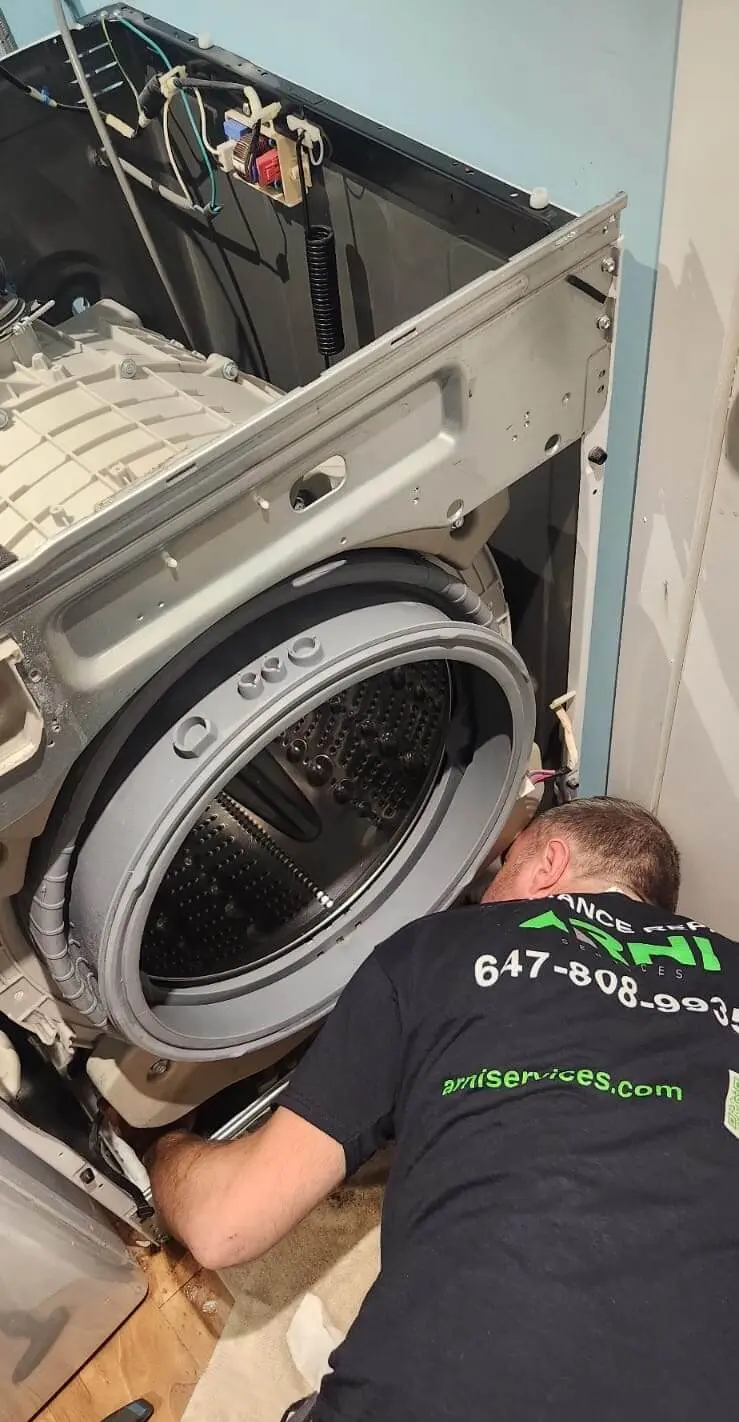
Who We Are, What We Do, and Where We Serve
We provide professional appliance repair and installation services for homes in the GTA. Our experienced technicians repair all major household appliances and are familiar with both condo and house setups.

Need Professional Help?
Call Our Experts Now!
Service Locations
We come to you
Washer Still Smells or Won’t Drain After Cleaning?
If vinegar hasn’t solved the problem, the cause is likely mechanical, such as a clogged drain pump, a worn door seal, or a failing part. ARNI Services gives every customer in Thornhill, Vaughan, and Toronto a clear assessment before recommending any repair. If it does not make financial sense to fix, we will tell you straight.
People Also Ask
Where do I put vinegar in my washing machine?
Put vinegar in the fabric softener dispenser. The washer releases it during the rinse cycle, after the detergent has done its job, which is when vinegar works best. If your washer has no softener dispenser, pause the machine at the start of the rinse cycle and pour the vinegar in directly, or use a fabric softener ball.
How much vinegar should I use in my washer?
Use ½ cup of white distilled vinegar for a regular load, up to 1 cup for large or smelly loads, and ¼ to ½ cup for a compact high-efficiency washer. To clean the washer itself, run an empty hot cycle with about 2 cups every one to two months, or up to 4 cups in a large top-loader. Using more than this doesn’t clean any better.
Will my clothes smell like vinegar?
No. The vinegar smell rinses out during the cycle and disappears completely once your clothes dry. In fact, vinegar helps remove odours like sweat and mildew by breaking down the residue that traps them.
Can I use vinegar in a high-efficiency or front-load washer?
Yes. Use ¼ to ½ cup in the fabric softener dispenser and stay within the fill line. Front-loaders benefit most from occasional vinegar cleaning, because moisture and detergent residue collect in the rubber door seal. Check your owner’s manual, since some manufacturers recommend their own washer cleaner instead.
Can I mix vinegar with bleach or baking soda in the washer?
Never mix vinegar with bleach. The combination releases toxic chlorine gas, so don’t use both in the same load or pour vinegar into the bleach compartment. Baking soda is safe but cancels vinegar out if added together, so use baking soda in the wash and vinegar in the rinse.
Is vinegar bad for my washing machine?
Not in normal amounts. Occasional use at ½ cup per load or a monthly cleaning cycle is generally safe. Heavy, frequent use can wear down rubber door seals and hoses over time, especially in front-loaders, so more is not better.
Why does my washer still smell after cleaning it with vinegar in Thornhill or Vaughan?
If a musty smell returns right after a vinegar cleaning cycle, the cause is usually mechanical rather than residue. Common culprits are a clogged drain pump or filter, a worn or mouldy door seal, or a drain hose that holds standing water. At ARNI Services we diagnose the fault first and provide a clear quote before any repair begins, with no hidden fees.