BLOG
USED APPLIANCE BUYING GUIDE
What to Check Before Buying a Used Appliance in Toronto & the GTA
Buying a used appliance can save you a few hundred dollars, or cost you more than a brand-new one ever would. At ARNI Services, we see both outcomes regularly. This guide covers the checks that matter most before buying any used washer, dryer, fridge, dishwasher, stove, or oven.
The single most important check is the model number and serial number sticker. Every appliance has one. Without it, identifying the correct replacement parts becomes extremely difficult, making future appliance repair costly or impossible regardless of the brand or type of appliance.
We help homeowners throughout Toronto, Vaughan, Thornhill, Richmond Hill, Markham, North York, Etobicoke, Aurora, and the surrounding GTA every day. Before you hand over your money for any used appliance, follow these checks to avoid buying someone else’s expensive problem.

Quick Answer
Before buying any used appliance, always check for a readable model number and serial number sticker. This applies to washers, dryers, fridges, dishwashers, stoves, ovens, and microwaves. If the sticker is missing, damaged, or removed, identifying replacement parts becomes extremely difficult, making future appliance repairs costly or impossible.
You should also inspect the appliance for rust, water damage, damaged door seals, and signs of previous repairs. Whenever possible, run the appliance through a complete cycle before paying.
Important: If the model number sticker has been removed from any appliance, it is often best to walk away from the purchase regardless of the price.
Check the Model Number and Serial Number Sticker First
This is the single most important step, and the one we almost never see buyers do.
Every appliance has a sticker with the model number and serial number. On a washer or dryer it is usually inside the door frame. On a fridge it is inside the compartment near the top wall. On a dishwasher it is along the top edge of the door opening. On a stove or oven it is inside the drawer or on the back panel. On a microwave it is inside the door frame or on the back.
This sticker is what a technician uses to identify the exact parts your appliance needs. Without it, repair becomes extremely difficult because different production years of the same brand and model can use completely different internal components.
No sticker? Walk away.
We recently had a customer in Vaughan purchase a used front-load washer that was not draining properly. When our technician went to identify the required replacement part, the model and serial number sticker had been completely removed. Only a faint outline remained on the plastic.

Without a model number, we could not identify the correct drain pump, control board, or seal. The same situation can happen with any appliance. A fridge, dishwasher, stove, or dryer with a missing sticker has the same problem. Guessing the wrong part costs more money and can cause further damage.
The repair was not possible, and the customer was left with a washer that could not be fixed and could not be returned.
Why Would a Sticker Be Removed?
The Appliance Was Written Off
Insurance companies sometimes write off appliances after flood, fire, or water damage. This applies to fridges, washers, dryers, dishwashers, and stoves alike. A removed sticker makes the appliance harder to trace back to the original claim or write-off.
It Has a Known Defect or Recall
Some appliance models across all categories have documented recalls or widespread failure issues. Removing the sticker from a fridge, dishwasher, washer, or oven makes it harder for the buyer or a technician to look up those problems before purchase.
It May Be Stolen
Serial numbers are used to identify stolen property across all major appliance categories. Fridges, washers, dryers, and dishwashers are all commonly targeted. While not the most common reason, it does happen.
You Cannot Verify Parts or History
Even if the appliance appears to work, a missing sticker means you cannot look up the service history, verify recalled components, or confirm which parts are compatible. This is a problem whether you are buying a fridge, a stove, a washer, or a dishwasher.
Three More Things to Check Before Buying a Used Appliance
1. Check for Water Damage or Rust
Look at the back panel, bottom corners, and underneath the appliance if possible. On washers and dryers, check around the drum and base. On fridges, check underneath and behind the unit. On dishwashers, look inside the tub for rust spots and check the base. Surface rust on the cabinet may be cosmetic, but rust around internal components, bearings, or structural parts often points to long-term water damage or a flood write-off.
2. Ask for the Model Number Before You Visit
Search the model number online before driving anywhere. This applies to every appliance type. Look for recalls, common complaints, and replacement part prices. A fridge compressor, a dishwasher control board, or a washer drum bearing can all be expensive parts. Knowing the repair history of a specific model before you buy can save you from a costly mistake.
3. Inspect Seals, Gaskets, and Door Conditions
On front-load washers, check the rubber door gasket for mold, tears, and cracks. On dishwashers, inspect the door seal along the full perimeter. On fridges, check that the door seals are tight on both the fridge and freezer compartments. A weak fridge seal means the compressor works harder and your food may not stay cold. On ovens and stoves, check that the door closes properly and the hinges are not bent or loose. Replacing seals and gaskets across any of these appliances adds cost on top of your purchase price.
What Is a Fair Price for a Used Appliance in the GTA?
Prices for used appliances in Toronto and the GTA vary depending on age, brand, condition, and how well the seller has maintained the unit. Use these ranges as a general guide before agreeing to any price.
| Appliance | Typical Used Price in GTA |
|---|---|
| Washer | $300 to $550 |
| Dryer | $250 to $450 |
| Washer and Dryer Set | $550 to $1,000 |
| Refrigerator (standard) | $350 to $700 |
| Refrigerator (French door or larger) | $600 to $1,200 |
| Dishwasher | $200 to $450 |
| Electric Stove or Range | $300 to $500 |
| Gas Range | $350 to $650 |
| Wall Oven | $250 to $500 |
| Microwave | $75 to $200 |
If the price is significantly below these ranges, ask yourself why. A seller pricing a washer at $100 or a fridge at $150 usually knows something you do not.
Also factor in repair costs before committing. A dishwasher that needs a $200 control board repair on top of a $250 purchase price is not really a $250 dishwasher. A fridge that needs a $300 compressor repair after a $400 purchase is a $700 fridge without a warranty.
When in doubt, ask the seller for the model number, search it online, and check what common repairs cost for that specific model before handing over any money.
Used Appliance Condition Checklist at a Glance
Use this quick reference before buying any used washer, dryer, fridge, dishwasher, stove, oven, or microwave in the GTA.
| What to Check | What It Means If Missing or Damaged |
|---|---|
| Model and serial number sticker is present and readable | If missing, parts cannot be identified and repair may be impossible on any appliance type. |
| Runs a full cycle without stopping or erroring | A washer, dryer, dishwasher, or oven that stops mid-cycle has a fault the seller may not be disclosing. |
| No rust on base, drum, tub, or back panel | Rust on internal components of a washer, dryer, dishwasher, or fridge often points to water damage or a flood write-off. |
| Door seals and gaskets are intact | Damaged seals on a washer, dishwasher, fridge, or oven add replacement cost on top of the purchase price. |
| Model number searched online before visiting | Skipping this step risks buying a recalled model or one with expensive known faults across any appliance category. |
| No signs of previous repairs or replaced parts | A fridge, washer, or dishwasher with mismatched parts or visible repair work may have ongoing issues the seller has not fixed properly. |
| Seller is willing to demonstrate a full cycle | A seller who refuses to run the appliance through a complete cycle is a warning sign regardless of the appliance type. |
If the seller cannot show you the model number sticker or refuses to run a full cycle on any appliance, those are both reasons to walk away before spending any money.
What Our Technicians See When Used Appliances Come In for Repair
At ARNI Services, we repair used appliances brought in by homeowners across Toronto, Vaughan, Thornhill, Richmond Hill, and Markham on a regular basis. The appliances vary: washers, dryers, fridges, dishwashers, stoves, ovens, and microwaves. But the problems we find most often are the same across all of them.
The most common issue we encounter is a missing model or serial number sticker. This happens across every appliance type. A fridge with no sticker, a dishwasher with a removed label, a stove with a scratched-off serial number. In all of these cases, we cannot look up the correct parts and the repair becomes extremely difficult or impossible.
We also regularly find water damage that was not visible at the time of purchase. On washers and dryers it tends to show up around the drum and base. On fridges it appears underneath the unit or around the compressor area. On dishwashers it shows up inside the tub and along the base panel. In many of these cases the appliance was likely written off after a flood or leak and resold without any disclosure to the buyer.
Door seals are another common issue across multiple appliance types. Front-load washer gaskets, dishwasher door seals, fridge compartment seals, and oven door seals all wear out over time. Sellers do not always mention this, but a damaged seal on any of these appliances adds to the true cost of ownership.
Before handing over money for any used appliance, take five minutes to check the sticker, look for rust and water damage, inspect the seals, and ask to run a full cycle. That five minutes can save you hundreds of dollars and a very frustrating call to a repair technician.
When to Call ARNI Services for a Used Appliance Repair
If you have already bought a used appliance and something is not working correctly, call us before assuming the worst. Many used appliance repairs are straightforward as long as the model number is available and the fault is a common one.
We repair all major brands including Samsung, LG, Whirlpool, Bosch, GE, KitchenAid, Maytag, Frigidaire, and Amana across Toronto, Vaughan, Thornhill, Richmond Hill, Markham, North York, Etobicoke, and Aurora.
Call us if:
- Your used washer is not draining, spinning, or starting.
- Your used dryer is not heating or taking too long to dry.
- Your used fridge is not cooling, making noise, or leaking water.
- Your used dishwasher is not draining, cleaning properly, or showing an error code.
- Your used stove or oven is not heating, igniting, or holding temperature.
- You have the model number and serial number available.
- You want an honest assessment of whether a repair makes financial sense.
We will always tell you upfront if a repair does not make sense. If the cost of fixing a used appliance is close to or more than its replacement value, we will say so before any work begins. You can also read our guide on whether to repair or replace an appliance to help you decide before calling.
Common Problems We Find on Used Appliances
At ARNI Services, we see used appliances come in for repair regularly. The appliance types vary but the problems we find most often are consistent across washers, dryers, fridges, dishwashers, stoves, and ovens.
Missing Model Number Sticker
The most common issue we encounter across all appliance types. A fridge, washer, dryer, dishwasher, stove, or oven with a missing model and serial number sticker cannot be properly identified. Without that information we cannot look up the correct parts and the repair becomes impossible regardless of what is actually wrong with the appliance.
Water Damage and Rust
Many used appliances that look clean on the outside have rust or water damage underneath or at the back. On washers and dryers it shows around the drum and base. On fridges it appears near the compressor and underneath the unit. On dishwashers it shows up inside the tub and along the base panel. This is a common sign the appliance was written off after a flood or leak and resold without disclosure.
Worn or Damaged Seals and Gaskets
Seal and gasket problems show up across multiple appliance types. Front-load washers frequently come in with cracked or moldy door gaskets. Dishwashers often have worn perimeter door seals. Fridges come in with weak compartment seals that are no longer airtight. Ovens sometimes have damaged door seals that let heat escape. In every case the previous owner may not have mentioned it, but it adds to the repair cost.
Faults That Only Show Mid-Cycle
Some appliances appear to work fine during a quick test but stop, error out, or underperform partway through a full cycle. A washer may fill but not spin. A dishwasher may start but not drain. A dryer may run but not heat. An oven may reach temperature but not hold it. This is exactly why we recommend always running a complete cycle on any appliance before buying.
Need Professional Help?
Call Our Experts Now!
Service Locations
We come to you
Don’t wait- call ARNI Services for best home appliance repair experts
today to get your appliances fixed. When searching for “appliance repair near me,” choose the trusted experts who deliver reliable appliance repair services right to your door.
Contact Us
Email: info@arniservices.com
Phone: 1-647-808-9935
For more information and services, visit ARNI Services.
Who We Are, What We Do, and Where We Serve
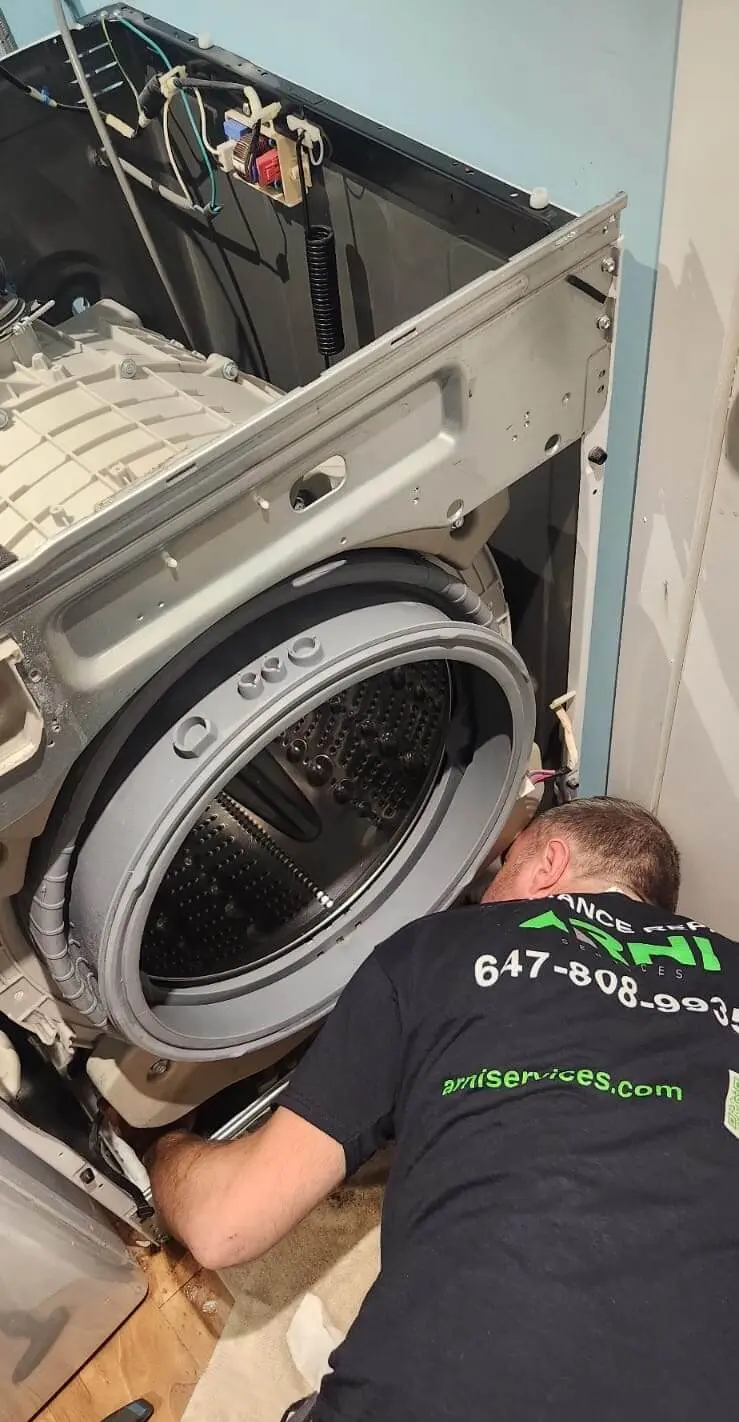
We provide professional appliance repair and installation services for homes in the GTA. Our experienced technicians repair all major household appliances and are familiar with both condo and house setups.
Need Help?
Talk To Our Technicians

We also serve North York, Thornhill, Richmond Hill, Vaughan, and surrounding areas. Local homeowners trust our service, and our strong Google reviews reflect the quality of our work.
Why Homeowners Across Toronto Trust ARNI Services
We repair used appliances for homeowners across Toronto and the GTA. When a used washer, fridge, dishwasher, dryer, or stove comes in with a problem, we give you a straight answer and tell you upfront if a repair makes financial sense.
Bought a Used Appliance That Is Not Working?
If your used washer, dryer, fridge, dishwasher, or stove is giving you trouble, ARNI Services can help. As long as the model number is available, we can diagnose the problem and give you an honest answer on whether a repair makes sense.
We service all major brands across Toronto, Vaughan, Thornhill, Richmond Hill, Markham, North York, Etobicoke, Aurora, and surrounding GTA communities. Same-day or next-day service is available when scheduling allows.
Frequently Asked Questions About Buying a Used Appliance in the GTA
What is the most important thing to check when buying a used appliance?
The model number and serial number sticker. This applies to every appliance type including washers, dryers, fridges, dishwashers, stoves, ovens, and microwaves. Without it, a technician cannot identify the correct replacement parts, which can make future repairs extremely difficult or impossible.
Where is the model number sticker located on different appliances?
It depends on the appliance. On front-load washers and dryers it is usually inside the door frame. On top-load washers it is often inside the lid. On fridges it is inside the compartment near the top or side wall. On dishwashers it is along the top edge of the door opening. On stoves and ovens it is inside the storage drawer or on the back panel. On microwaves it is inside the door frame or on the back of the unit.
Why would someone remove the model number sticker from an appliance?
There are several reasons, none of them good for the buyer. The appliance may have been written off by an insurance company after flood or fire damage. It may have a known defect or recall. In some cases the serial number has been removed to make stolen property harder to trace. This can happen with any appliance type including fridges, washers, dryers, and dishwashers.
Is it worth repairing a used appliance?
It depends on the repair cost compared to the value of the appliance. A general rule is that if the repair costs less than half the price of a comparable new machine, it is usually worth fixing. This applies to washers, dryers, fridges, dishwashers, stoves, and ovens. At ARNI Services we give you an honest assessment before any work begins.
What is a fair price for a used appliance in Toronto and the GTA?
General price ranges for used appliances in good working condition in the GTA are as follows. Washers typically sell for $300 to $550. Dryers sell for $250 to $450. A matched washer and dryer set sells for $550 to $1,000. Standard fridges sell for $350 to $700, while French door and larger models sell for $600 to $1,200. Dishwashers sell for $200 to $450. Electric stoves and ranges sell for $300 to $500, while gas ranges sell for $350 to $650. Wall ovens sell for $250 to $500. Microwaves sell for $75 to $200. If the price is significantly below these ranges, ask why before committing.
Can ARNI Services repair a used appliance with no model number?
In most cases, no. The model number is how we identify the correct parts for your specific appliance, whether it is a washer, dryer, fridge, dishwasher, stove, or oven. Without it, we cannot safely or accurately complete a repair. We will always tell you this upfront rather than guess and charge you for incorrect work.
What brands does ARNI Services repair across the GTA?
We repair all major brands including Samsung, LG, Whirlpool, Bosch, GE, KitchenAid, Maytag, Frigidaire, and Amana. We service washers, dryers, fridges, dishwashers, stoves, ovens, cooktops, and microwaves across Toronto, Vaughan, Thornhill, Richmond Hill, Markham, North York, Etobicoke, Aurora, and surrounding GTA communities. Call 647-808-9935 or book online to schedule a visit.